Conventional Shower Waterproofing vs. Schluter Systems: What’s the Difference?
When planning a bathroom remodel, most homeowners focus on tile, fixtures, and layout. However, what truly determines the longevity of your shower isn’t what you see, it’s what’s behind the tile.
At Nix Cabinetry & Tile, one of the most important conversations we have with clients is about waterproofing. Understanding the difference between conventional shower waterproofing and a Schluter system can help you make a smarter, longer-lasting investment in your home.
Let’s break it down.
What Is Conventional Shower Waterproofing?
Traditional shower waterproofing has been used for decades. Essentially, it relies on a layered system beneath the tile to manage water.
How It Works:
- A pre-sloped mortar bed is installed
- A PVC or CPE liner is placed underneath
- Cement board walls are installed
- Tile is set over the mortar bed
- Water that passes through the grout and tile travels down to the liner
- Weep holes in the drain allow moisture to escape
The Important Thing to Know:
Tile and grout are not waterproof. In fact, in a conventional system, water penetrates through the tile layer and saturates the mortar bed before eventually reaching the liner.
Pros:
- Lower upfront material cost
- Widely recognized and used method
- Familiar to many installers
Cons:
- Mortar bed can remain damp for extended periods
- Greater potential for mold or mildew odors if moisture lingers
- Heavier system overall
- Highly dependent on precise installation (improper slope or clogged weep holes can cause failure)
When installed correctly, a traditional system can perform well. However, it requires careful craftsmanship and leaves more room for long-term moisture retention.
What Is a Schluter Shower System?
A Schluter system uses a modern, surface-applied waterproofing method. Instead of managing water beneath the mortar bed, it stops water immediately under the tile layer.
At Nix Cabinetry & Tile, we often recommend Schluter systems for homeowners who want superior moisture protection and long-term performance.
How It Works:
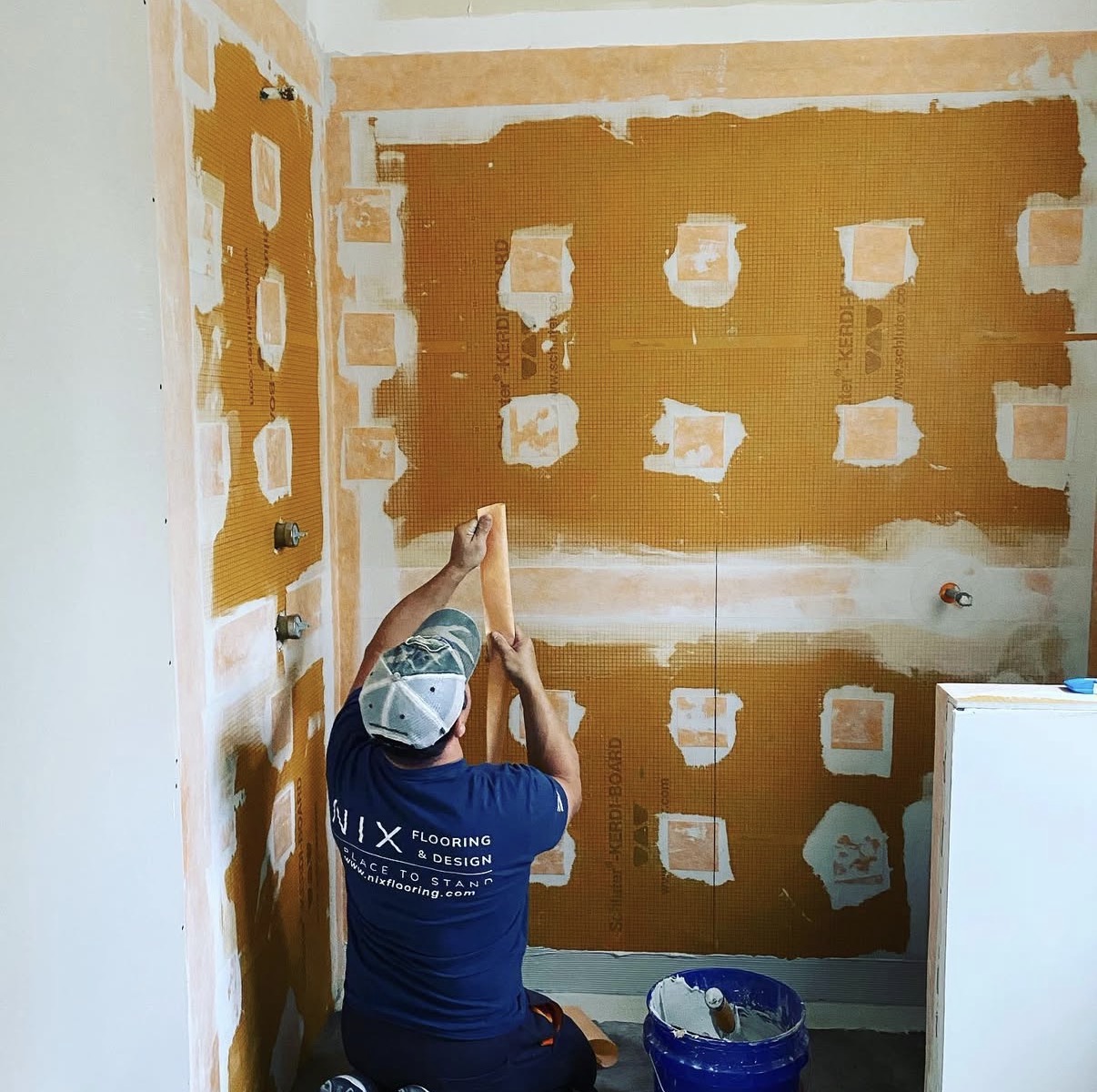
- A waterproof membrane (such as Kerdi) is installed directly beneath the tile
- Seams are sealed with waterproof banding
- An integrated bonding flange drain connects directly to the membrane
- Pre-sloped shower trays can be used for precision installation
The Key Difference:
Water never reaches a saturated mortar bed. Instead, it is stopped at the surface level, directly beneath the tile.
Pros:
- Faster drying time
- Reduced risk of mold or mildew
- Lighter-weight system
- Integrated, engineered components
- More predictable long-term performance
Considerations:
- Higher material investment
- Requires trained, knowledgeable installers
Side-by-Side Comparison
| Conventional Waterproofing | Schluter System |
|---|---|
| Water passes through tile into mortar bed | Water is stopped directly under tile |
| Mortar bed can stay damp | Mortar bed remains dry |
| Relies on weep holes for drainage | Integrated bonding flange drain |
| Traditional layered system | Modern engineered waterproof system |
| More room for installer error | Controlled, system-based installation |
Why Waterproofing Matters in Humid Climates
In coastal and humid environments like ours, moisture control is especially important. Because of elevated humidity levels, showers that retain internal moisture may take significantly longer to dry.
Over time, this can increase the likelihood of mold growth, odor, or premature material deterioration. Therefore, choosing a system that minimizes moisture retention can make a noticeable difference in long-term performance.
Surface-applied waterproofing systems like Schluter are specifically designed to dry faster and manage moisture more efficiently, making them a smart investment for many homeowners.
The Nix Cabinetry & Tile Difference
Waterproofing systems are only as good as the team installing them.
At Nix Cabinetry & Tile, our in-house trained installers specialize in precision shower construction. We focus on:
- Proper slope and drainage
- Seam integrity
- Waterproof membrane continuity
- Detailed niche and corner sealing
- Long-term performance, not shortcuts
We don’t just install tile, we build showers designed to perform beautifully for years to come.
Which System Is Right for You?
Both conventional waterproofing and Schluter systems can work when installed properly. The right choice depends on your goals, budget, and long-term expectations for your bathroom.
If you’re investing in a primary bathroom remodel and want added moisture protection, faster drying performance, and a fully integrated system, Schluter often provides greater peace of mind.
To explore our full range of bathroom remodeling services, visit our services page how Nix Cabinetry & Tile can bring your vision to life.
Planning a bathroom renovation?
Visit our showroom or contact Nix Cabinetry & Tile to discuss your project with our design and installation team.